Based on 2023 NEC and PG&E Greenbook (Overhead Service)
1. Scope and Purpose
This guide explains where residential main service panels may be installed or relocated when upgrading an overhead service.
It combines requirements from the 2023 National Electrical Code (NEC), the PG&E Greenbook, and Reliant Electrical & Automation’s internal field standards.
2. NEC Fundamentals for Panel Locations
Service Disconnect (NEC 230.70)
- Must be readily accessible and located outside or nearest the point of entrance of service conductors.
- Cannot be installed in bathrooms or clothes closets.
- Handle height shall not exceed 6 ft 7 in above the floor (NEC 240.24).
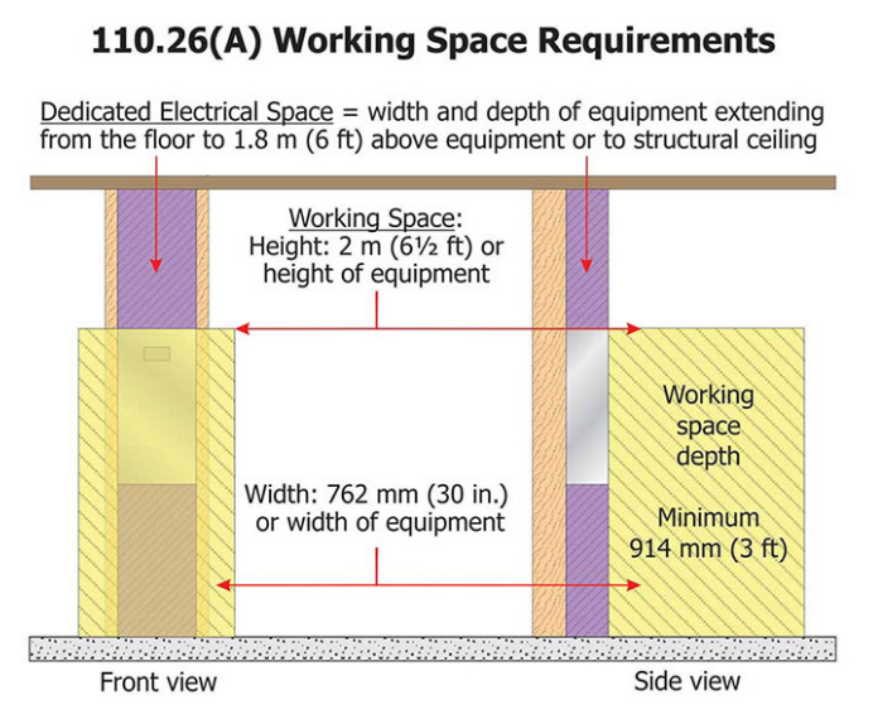
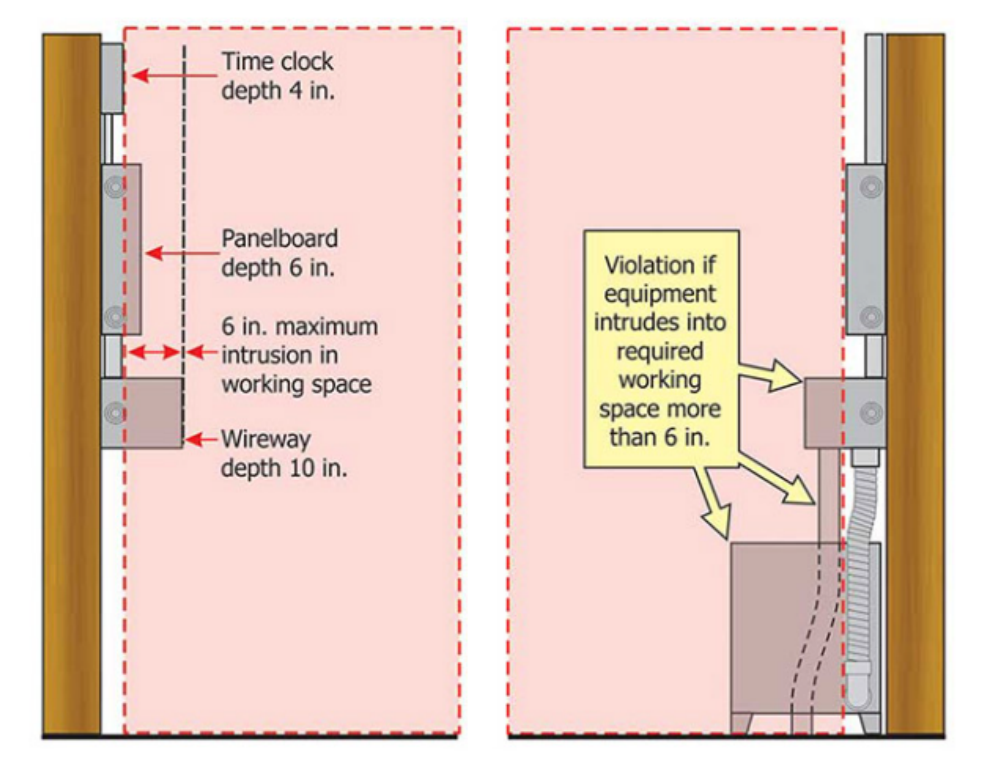
Working Space Requirements (NEC 110.26)
| Dimension | Minimum | Notes |
|---|---|---|
| Width | 30 inches | Centered on panel; measured side to side. |
| Depth | 36 inches | Clear working space in front of the panel. |
| Height | 6 ft 6 in | From floor to ceiling or lowest obstruction. |
- No storage is allowed in this space.
- The panel must open freely (90° minimum door swing).
- Floors must be level and dry.
- Adequate illumination is required in all working spaces.
3. PG&E Greenbook Requirements for Overhead Service
According to PG&E Electric and Gas Service Requirements (Greenbook) and Reliant field documentation:
Location and Accessibility
- Panels and meter/main combinations must be installed on an exterior wall facing or adjacent to the utility service drop.
- Must be readily accessible to PG&E personnel at all times.
- Avoid mounting behind locked gates or within fenced backyards unless a utility lock is provided.
- Keep within 10 feet of the service drop connection point when possible.
Mounting Height and Position
| Component | Minimum | Maximum | Reference |
|---|---|---|---|
| Meter centerline | 4 ft | 6 ft | PG&E Greenbook |
| Panel base above grade | 12 in | — | PG&E Greenbook |
| Weatherhead height (mast) | 18 ft (min. at point of attachment) | 22 ft (typical clearance) | NEC 230.24(B)(1) |
The mounting surface must be structurally sound (e.g., framing or backboard) and not solely supported by siding.
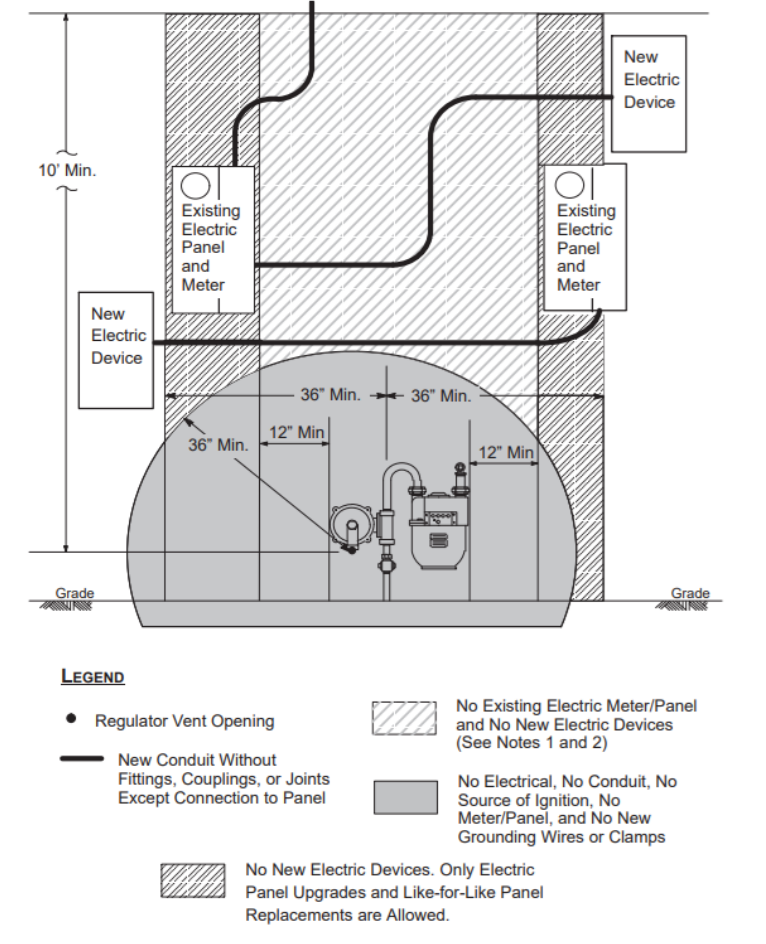
4. Separation from Other Structures
| Object | Required Clearance | Reference |
|---|---|---|
| Gas meters or regulators | 36 in. horizontally | PG&E Greenbook |
| Windows, doors, openings | 36 in. horizontally; 12 in. vertically | NEC 110.26, PG&E |
| Building corners or eaves | 12 in. minimum | PG&E Greenbook |
| Finished grade | Panel bottom ≥ 12 in. above grade | PG&E Greenbook |
5. Coordination Between NEC and PG&E
To ensure a compliant upgrade:
- Locate the panel on the same side as the service drop.
- Maintain utility access for reading and servicing.
- Preserve NEC working space at all times.
- Verify grounding and bonding per NEC 250.
- Use continuous rigid conduit from weatherhead to meter base.
6. Typical Layout for a Residential Overhead Upgrade
A compliant installation includes:
- Surface-mounted meter-main combo on an exterior wall nearest the service drop.
- Weatherhead mast providing required overhead clearances.
- Service conductors in 2″ RMC from weatherhead to meter base.
- Two 8-ft ground rods, 6 ft apart, bonded to the panel.
- Working clearance zone maintained in front of equipment.
7. Common Violations to Avoid
- Mounting panels behind fences without PG&E access.
- Installing under decks or in laundry rooms.
- Setting panels too low (<12″) or too high (>6’7″).
- Insufficient overhead mast height.
- Obstructing 30″ width or 36″ working depth.
8. Quick Reference Checklist
| Item | Requirement | Source |
|---|---|---|
| Panel on service side of building | Required | PG&E Greenbook |
| Meter height (centerline) | 4–6 ft | PG&E Greenbook |
| Working clearance | 30″ W × 36″ D × 6’6″ H | NEC 110.26 |
| Disconnect accessibility | Required | NEC 230.70 |
| Clearance from openings | 36″ | NEC / PG&E |
| Ground rods | Two, 6 ft apart | NEC 250.53(A)(3) |
Panel Upgrade & Replacement Services
At Reliant Electrical & Automation Inc., we specialize in modernizing outdated electrical panels to meet current NEC and PG&E standards. Whether you’re upgrading service for a remodel, replacing a fuse box, or preparing for solar and EV charging, our licensed electricians ensure every installation is safe, code-compliant, and utility-approved.
We handle everything — from permit coordination and PG&E inspections to panel swaps, grounding upgrades, mast rebuilds, and labeling — so your system runs reliably for years to come.