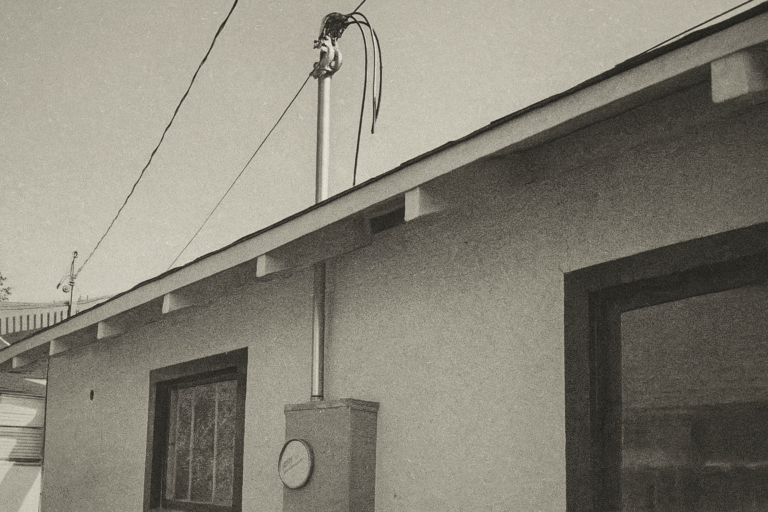
Most homes and businesses use alternating current power, but not every building receives the same type of electrical service. One of the most common points of confusion is the difference between wye and delta power, especially when dealing with 120V, 208V, and 240V circuits.
These voltages are all common, but they come from different transformer configurations and are used for different types of loads. Understanding the difference is important when sizing equipment, installing panels, connecting motors, or troubleshooting voltage problems.
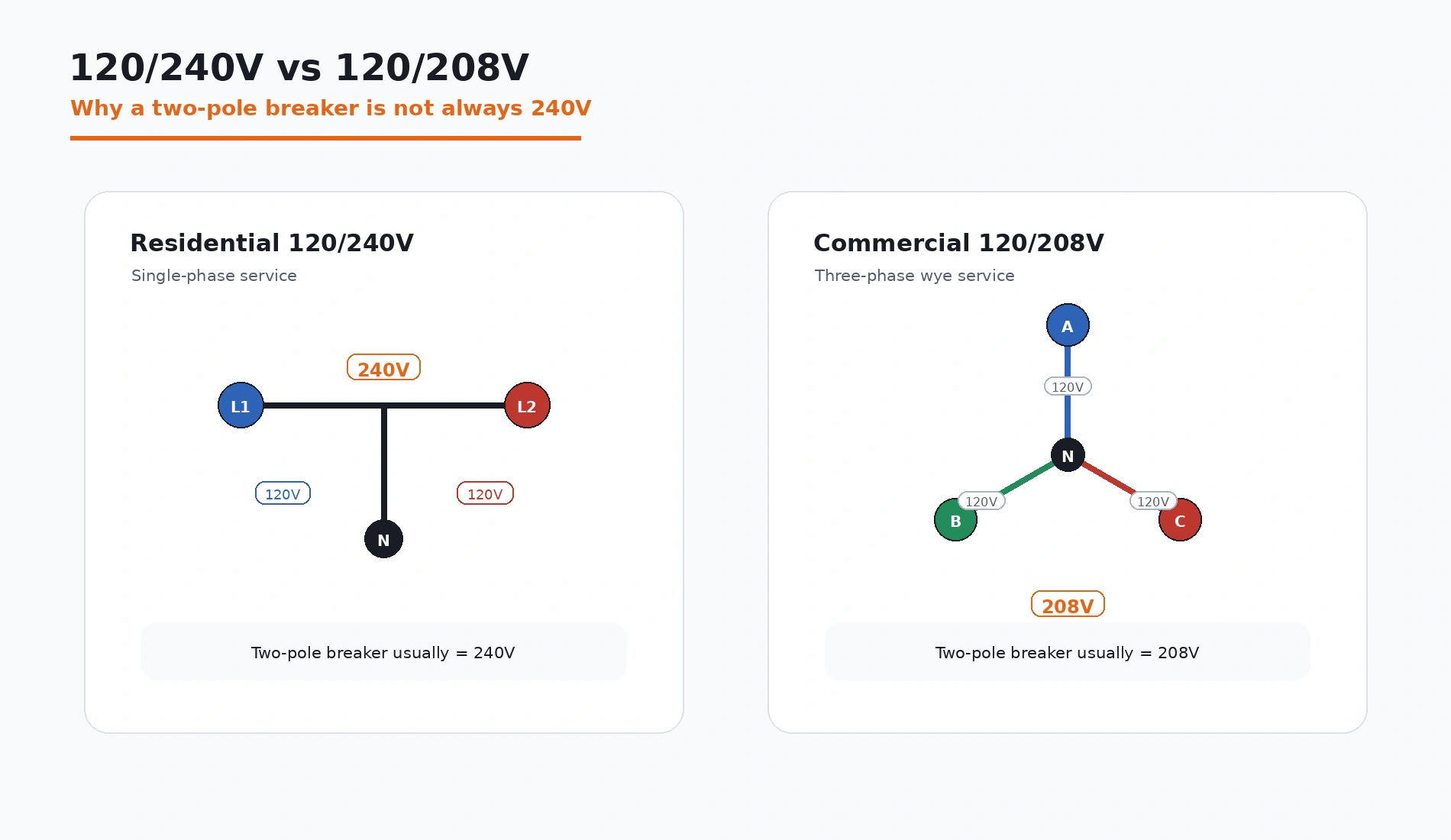
TL;DR Wye and delta describe how three-phase transformer windings are connected, and that connection determines what voltages are available. A typical home has 120/240V single-phase power. Many commercial buildings use 120/208V three-phase wye, which gives 120V to neutral and 208V phase-to-phase. Some shops, farms, and older commercial buildings use 240V delta, which provides 240V phase-to-phase for motors and equipment. The important detail is that a two-pole breaker is not always 240V — in a 120/208V panel, it is usually 208V.
The Simple Version
120/240V single-phase is common in homes.
120/208V three-phase wye is common in commercial buildings.
240V three-phase delta is common in older commercial, agricultural, and industrial buildings.
High-leg delta can provide 120V and 240V, but one phase measures about 208V to neutral and must be handled carefully.
What Is a Wye Electrical System?
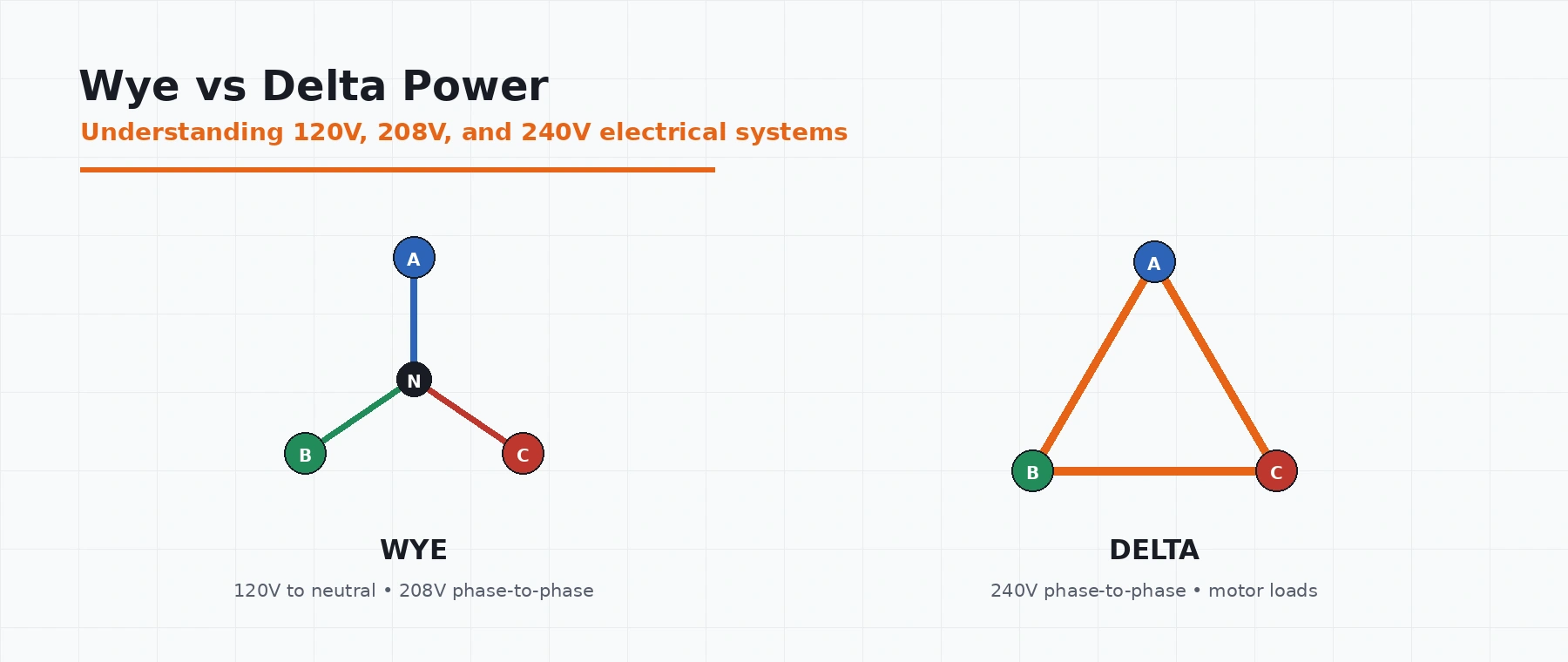
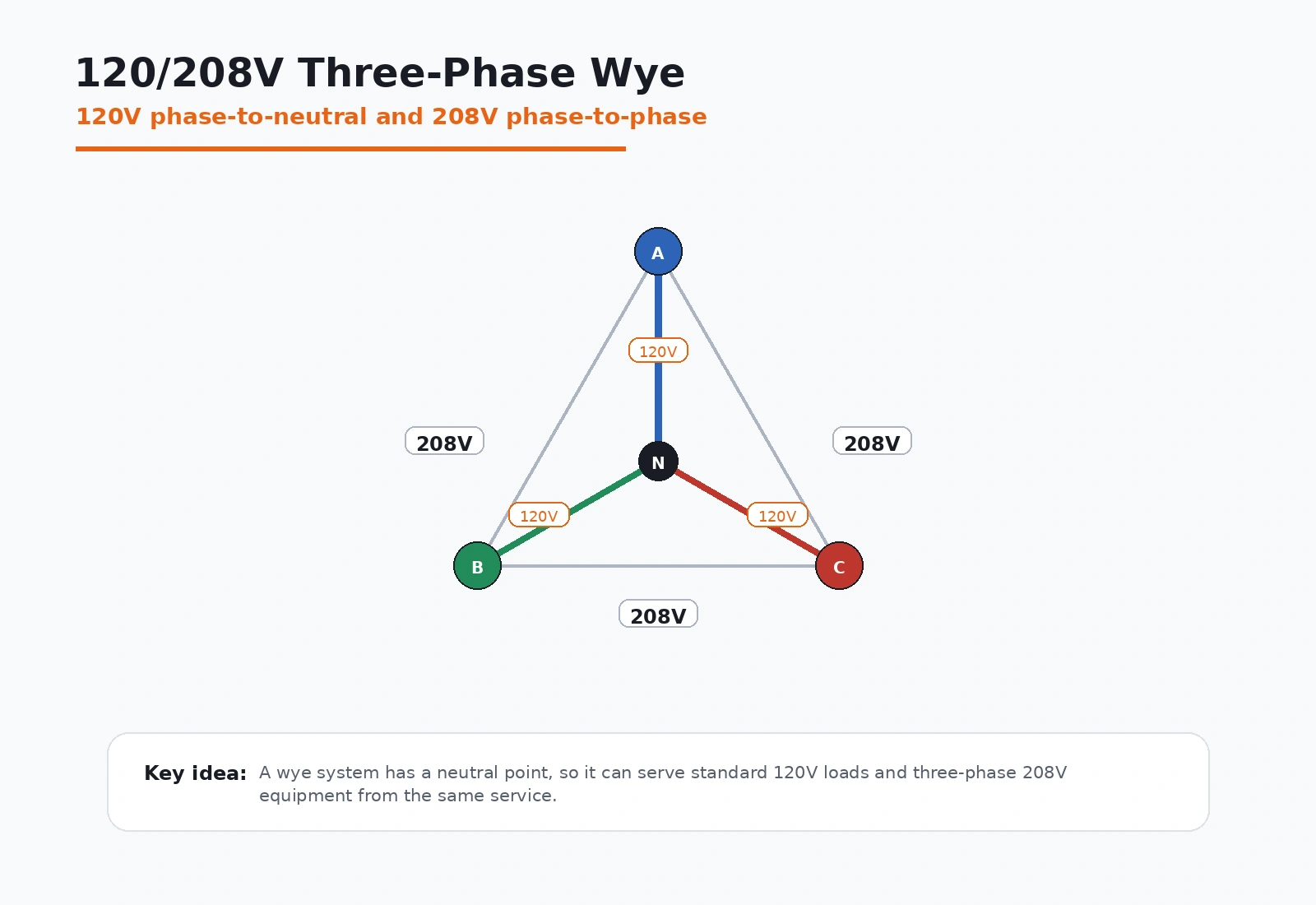
A wye system is a transformer configuration where the three phase windings connect together at a common center point called the neutral. Because the system has a neutral, it can provide both line-to-line voltage and line-to-neutral voltage.A 120/208V wye system provides 120V from phase to neutral and 208V from phase to phase.A very common commercial service is 120/208V three-phase wye. In this system, each phase to neutral measures about 120V, while phase-to-phase voltage measures about 208V.
Phase A to neutral = 120V
Phase B to neutral = 120V
Phase C to neutral = 120V
Any phase to any other phase = 208V
This is why many commercial buildings have both 120V receptacle circuits and 208V equipment circuits from the same panel.
Why Is It 208V Instead of 240V?
In a three-phase wye system, the phase voltages are separated by 120 electrical degrees. Because of that phase angle, the voltage between two hot legs is not simply 120V plus 120V.
120V × 1.732 = 208V
That is why a 120/208V wye service gives you 120V to neutral, but 208V between phases.
What Is a Delta Electrical System?
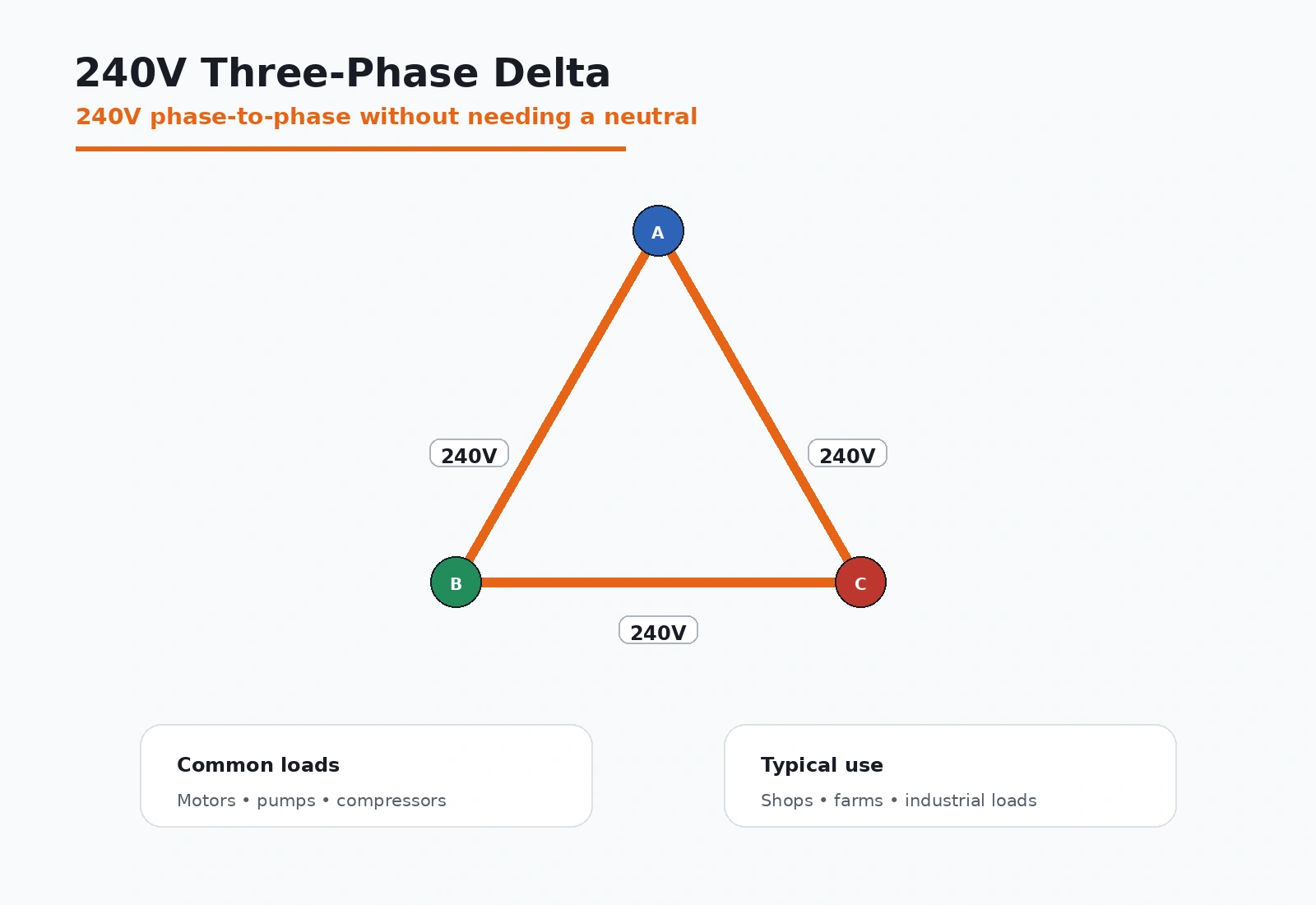
A delta system is a transformer configuration where the windings are connected in a triangle shape. Delta systems do not require a neutral to provide three-phase power.A 240V delta system is commonly used for three-phase motors, pumps, compressors, and shop equipment.A common delta service is 240V three-phase delta. In a straight 240V delta system, each phase-to-phase measurement is 240V.
Phase A to Phase B = 240V
Phase B to Phase C = 240V
Phase C to Phase A = 240V
This type of system is often used for three-phase motors, pumps, compressors, shop equipment, agricultural equipment, and older commercial loads.
What Is a High-Leg Delta System?
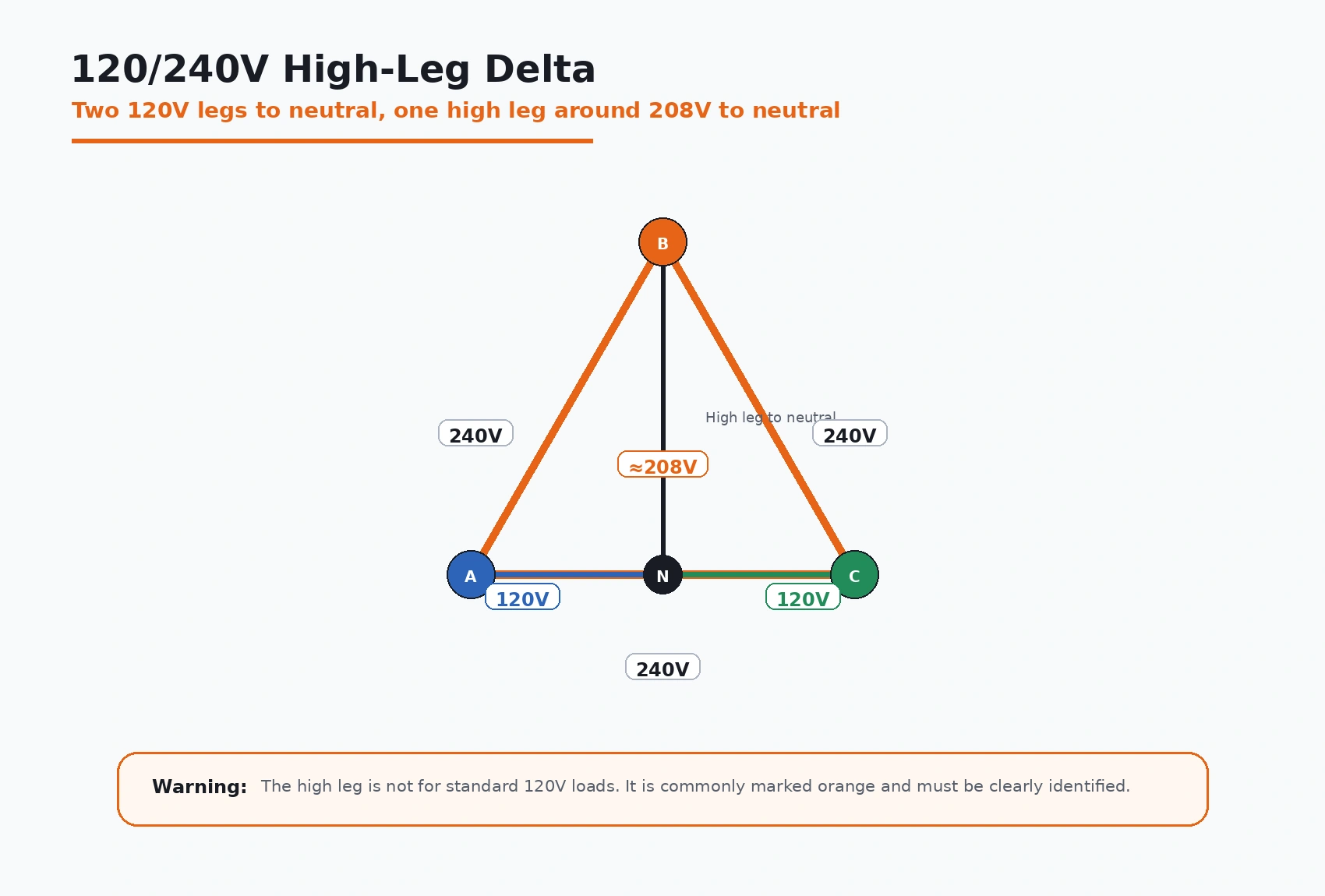
One special version of delta service is called 120/240V high-leg delta. This system provides both 240V three-phase power and 120V single-phase power, but it has one phase that measures much higher to neutral.In a high-leg delta system, one phase measures about 208V to neutral and should not be used for standard 120V loads.In a 120/240V high-leg delta system:
Phase A to neutral = 120V
Phase C to neutral = 120V
Phase B to neutral = about 208V
Phase A to Phase B = 240V
Phase B to Phase C = 240V
Phase C to Phase A = 240V
The high leg is usually marked orange and must not be used for standard 120V loads. A 120V circuit accidentally connected to the high leg can damage equipment immediately.
120V, 208V, and 240V: Common Uses
120V Power
Used for receptacles, lighting, computers, TVs, small appliances, garage door openers, control circuits, and office equipment.
208V Power
Common in commercial buildings for HVAC equipment, motors, commercial kitchen equipment, EV chargers, lighting panels, and some IT equipment.
240V Power
Common in homes for dryers, ranges, water heaters, air conditioners, EV chargers, well pumps, and heat pumps.
120/240V Single-Phase vs 120/208V Three-Phase
These two systems are often confused because they both provide 120V circuits. A typical home has 120/240V single-phase power. A typical commercial building may have 120/208V three-phase wye power.A two-pole breaker in a house usually gives 240V. A two-pole breaker in a 120/208V commercial panel gives 208V.
Common Voltage Comparison
System Type
Line to Neutral
Line to Line
Common Use
120/240V single-phase
120V
240V
Homes and small buildings
120/208V three-phase wye
120V
208V
Commercial buildings
240V three-phase delta
Usually no neutral
240V
Motors, shops, and industrial loads
120/240V high-leg delta
120V, 120V, and 208V high leg
240V
Older commercial and agricultural services
277/480V three-phase wye
277V
480V
Larger commercial and industrial buildings
Why This Matters for Equipment
Before installing equipment, it is important to confirm the actual available voltage at the panel. A device labeled 240V only may not work correctly on 208V. A device labeled 208/240V is usually designed to work on either voltage.A device labeled 120V must be connected from a proper 120V phase to neutral, not to a high leg. Three-phase motors also need to match the available system voltage. A motor designed for 208V, 230V, or 460V must be connected according to its nameplate and wiring diagram.
Common Mistakes
In a house, a two-pole breaker usually gives you 240V.
In a 120/208V commercial panel, a two-pole breaker gives you 208V.
In a high-leg delta panel, a two-pole breaker may give you 240V, but one of those phases may measure about 208V to neutral.
That is why voltage should always be measured and verified before connecting equipment.
Wye vs Delta: Which Is Better?
Neither system is automatically better. They are simply used for different applications.Wye systems are very useful when a building needs both 120V loads and three-phase power. That makes 120/208V wye very common in offices, retail spaces, churches, restaurants, and light commercial buildings.Delta systems are useful for three-phase motor loads and can be found in shops, farms, older commercial buildings, and industrial facilities.
Final Thoughts
The main difference between wye and delta power comes down to transformer configuration and the voltages available from that configuration.
A 120/208V wye system gives you 120V from phase to neutral and 208V from phase to phase.
A 120/240V single-phase system gives you 120V from either hot leg to neutral and 240V between the two hot legs.
A 240V delta system gives you 240V phase to phase.
A high-leg delta system can provide 120V and 240V, but the high leg requires special care.
Before installing equipment, always confirm the service type, panel voltage, phase configuration, and equipment nameplate rating. The difference between 208V and 240V may seem small, but it can affect performance, compatibility, and safety.
Need Help Verifying Your Electrical System?
For electrical upgrades, equipment installations, panel work, or troubleshooting in Fresno, Clovis, Madera, and the Central Valley, Reliant Electrical and Automation Inc. can help verify your system and make sure your equipment is connected correctly.